Splash Soft-Sided Pools vs. Traditional Sheet Metal Pools: Which Offers Better Long-Term Value?
When shopping for an above-ground pool, most homeowners compare purchase prices. But the real cost of pool ownership extends far beyond the day the pool is installed.
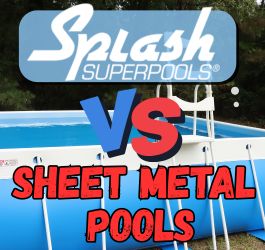
Traditional sheet metal pools and Splash soft-sided pools both offer years of family fun, but they differ significantly in installation, maintenance requirements, longevity, and eventual resale value.
Let's take a closer look.
1. Installation Costs: DIY vs. Professional Installation
One of the biggest surprises for new pool buyers is discovering that installation costs are often separate from the purchase price.
Most sheet metal pools require professional installation. The process typically includes assembling wall panels, installing the liner, leveling the site, and completing the structural setup. Professional installation can represent a significant additional expense.
Splash pools are different.
The majority of Splash owners install their pools themselves using common tools and basic DIY skills. This allows many families to avoid thousands of dollars in installation expenses while maintaining the flexibility to relocate or reconfigure the pool later if needed.
Winner: Splash Pools
DIY-friendly design can significantly reduce upfront ownership costs.
2. Liner Replacement Costs
This is where the numbers can really add up.
Traditional sheet metal pools rely on a vinyl liner that generally requires replacement every 3 to 5 years, depending on weather exposure, water chemistry, and maintenance practices. Liner replacement isn't just the cost of the liner itself—many owners also pay professional labor for removal and reinstallation.
Splash pools use a different approach.
Many Splash pools have remained in service for 20 years or more using their original soft-sided wall and liner system. In fact, some Splash pools installed decades ago are still providing reliable family enjoyment today.
Over the life of the pool, avoiding multiple liner replacements can save homeowners thousands of dollars.
Winner: Splash Pools
Fewer major replacement expenses over the life of the pool.
3. Structural Maintenance
Both pool types require routine care and maintenance.
Sheet metal pools can experience corrosion, deterioration, or damage over time depending on environmental conditions and water chemistry. Saltwater systems can be particularly challenging for metal components.
Splash pools are not completely immune to corrosion either. Metal support legs can show rust at ground level, especially in wet environments or with saltwater systems. However, Splash offers stainless steel support legs that are more resistant to corrosion. This option is meant for customers who have salt systems or live in high humidity areas and is available to anyone. Because Splash pools do not depend on large sheet metal wall structures, owners avoid many of the repair concerns associated with wall-panel deterioration.
Advantage: Splash Pools
Less dependence on large sheet metal structural components.
4. Longevity
Many consumers assume rigid sheet metal construction automatically means a longer-lasting pool.
In reality, longevity depends on the entire system and the maintenance required over time.
Splash pools have demonstrated exceptional real-world longevity, with some installations remaining in service for 20-30 years. (Read real customer testimonials on the website.) The ability to avoid repeated liner replacements and major structural rebuilds can dramatically extend the practical life of the pool.
Advantage: Splash Pools
Proven long-term performance in the field.
5. What Happens When You're Done With the Pool?
This is a factor many buyers never consider.
Eventually, kids grow up, schedules change, and some families decide they no longer need a pool.
When that happens, Splash pools often retain meaningful resale value because they can be disassembled, transported, and reinstalled relatively easily.
Traditional sheet metal pools face a different challenge. A buyer may be required to purchase a new liner and pay for professional installation after relocation. As a result, many older sheet metal pools have little resale value and are frequently removed and discarded rather than relocated.
Winner: Splash Pools
Greater potential resale value and easier relocation.
The Bottom Line
The biggest difference between Splash pools and traditional sheet metal pools isn't simply the materials—it's the long-term ownership experience.
With DIY installation, reduced maintenance requirements, no routine liner replacement cycle, proven longevity, and meaningful resale value, Splash pools often deliver a substantially lower total cost of ownership over time. For families looking for maximum enjoyment and minimum hassle, a Splash pool offers a practical alternative to traditional sheet metal pool systems.